Showing posts with label Dropbox. Show all posts

Monday, 9 November 2015

Police Raided Researcher Link From Script Kiddie Opened

An American system and security researcher who has lived in Austria had to deal with a police raid after his own words opened a link from a script kiddie. Christian Haschek decided to visit an IRC channel of the hacker collective Lulzsec.

There he made contact with a boy who had discovered Nikto, a tool to help search automatically for vulnerabilities in Web servers. "It was a nice guy, but obviously a script kiddie, so I did not too long talk with him," said Haschek. A few hours later he was approached by the boy through a private chat and was sent to a link. It was the address of a political party behind it a directory called 'tools'. Directory listing was switched so that all files in the directory were visible. The researcher claims to have a number of files opened, but it seemed to him as a folder where the webmaster had placed a number of files that may have been linked elsewhere on this website.

Because Haschek only wanted to chat on IRC he used to have no VPN or proxy. "And usually I open any links, but in this case seemed to link legitimate and not suspicious." He thought therefore no more about it until the next day he read in the media that the website of a political party was hacked. The same website that he had visited the night before. The attacker had usernames, email addresses and hashed passwords found and posted on Pastebin. "The kiddie had clearly found an exploit in the tools directory and used to access the server," says the researcher.

Police raid

Four months passed and Haschek had already forgotten the incident until he came home and the police anti-terror officers and a prosecutor encountered. The police claimed that they had evidence that he had hacked the website of the political party and they had a search warrant. "They thought I was the script kiddie and that my VPN any time had not worked and she therefore saw my public IP address." The police also asked for his password and encrypted data that he had on his computer, which was not the case.

Haschek stated that he had only the link from the script kiddie opened and that he had not used a VPN because he had done nothing illegal. The police revealed the investigator to have followed for weeks and drained in order if possible to identify the leaders. Eventually took all his computers, hard drives, USB sticks and laptops. In addition, he was told that his property would probably recover a year later. When the incident occurred not know exactly Haschek late, but he reports that he is indeed back a year later got everything.

Dropbox

"By a happy coincidence, I had all my personal and business files a few days before the invasion put in Dropbox," he observes. The police let the investigator know that they cloud data not like it, because they have to get an international warrant to retrieve the data to Google or Dropbox. Eighteen months after the incident, the Austrian Public Prosecutor's Office decided to drop the case to Haschek nothing was wrong. However, he had to buy a new computer because the police who held him so long. In addition, he found one of his USB sticks a Word document containing a photograph of someone. The Word document was not of the investigator and he suspects that the Austrian police file accidentally posted on his USB stick.However Haschek has learned his lesson. "Do not open links from random people on the Internet."

Wednesday, 21 October 2015

1Password Password Manager Will Tighten Security


The popular password manager 1Password is security tightening after criticism from a Microsoft engineer. Engineer Dale Myers discovered the metadata for users, such as URLs, is stored unencrypted. A problem four years ago, even though it was reported.

For storage of data used 1Password two methods. The first is the AgileKeychain, which was followed by the OPVault in 2012. According to the developers 1Password possessed in the early days did not have enough computing power to decrypt and, for example searching logins. Because of these limitations, it was decided not to encrypt the URL and name of websites.

In 2012 the new OPVault format was launched, it offered more encryption. However, it was decided to upgrade users do not automatically safer this format, because users who use older versions of 1Password then not be able to access their accounts. Although AgileKeychain according to its developers is safe, it is now time to move on. Therefore OPVault the standard will be and there will be an automatic migration for all users.

Tuesday, 20 October 2015

1Password Password Manager Metadata Leaks


The popular Password manager 1Password appears to be leaking metadata from users, a problem that already in 2011 was noted. This time it's Microsoft engineer Dale Myers who discovered that metadata users is stored unencrypted.

1Password has a feature to support Dropbox synchronization between different devices. In addition to that store different files, including an unencrypted JavaScript file containing the names and addresses of all items stored in 1Password. This JavaScript file is accessible to third parties, warns the engineer.

"Anyone who change the link on the login page of me knows keychain can link and retrieve the file." This could especially be a problem for people with accounts for certain websites which they do not want others to know this. This problem only occurs when AgileKeychain format of 1Password and not the newer OPVault. Myers calls the developers of 1Password therefore to make this the only supported format.

In addition, Myers also presents another problem, which attackers can use the metadata to change a password if the user wants to reset his password, but not beyond the reset page has come. In this case, the reset link can be stored as metadata. The Microsoft engineer states that in 99% of cases is not a problem but in certain cases. The problem, according to Myers increased because some people link to their keychain to have on their website and in some cases is indexed by Google.

The developers of 1Password were informed by Myers, but let it be known that this was a deliberate design choice. In addition, the AgileKeychain is an older format in 2012 was replaced by OPVault. Still, Myers is also about critical, as when creating a OPVault on Mac OS X the user must provide a password hint to be stored unencrypted. Myers himself used 1Password for years. Through his findings in the Password Manager confidence is shaken. Yet he is not going to move.

Friday, 14 August 2015

Dropbox Secure Accounts With USB Key


Users who want to protect their Dropbox account additional courses may also log in via a USB key. The 'security key' functions as a second security factor during login. Once the password is entered, the presence of the Universal 2nd Factor (U2F) security key checked. In addition, the USB device works only on dropbox.com and can thus prevent phishing.

According Dropbox security key, thus providing protection to more than two-factor authentication via SMS is the case. For the login makes use of the security key U2F-protocol developed by the FIDO Alliance. This is an alliance of IT companies that want to eliminate the password and therefore come up with alternative solutions.

Dropbox users to log in via the USB key will first set in their account. At this moment U2F only dropbox.com in conjunction with Google Chrome. The USB key is via different suppliers to obtain. Last year, Google decided U2F for logging in to Google Accounts support .

Friday, 3 July 2015

Dropbox Will Compensate Users For Security Check


Dropbox is just like Google Drive users with free storage reward if they go through a security check.During the 'health check' that examines issues such as login method and institutions to share data. Users who go through the check at all will be rewarded with free storage. Patrick Heim Dropbox lets opposite site V3 know.

According to Heim find most attacks on users via reused passwords. "The biggest challenge is consumers who reuse credentials on multiple websites, and we see a pattern that be hacked websites, they may not know it, and the encrypted passwords are stolen." Then attackers can crack the password hashes and use it to log into other accounts from the user.

Heim says that after a hacked website logging increases with stolen passwords. He advises consumers whatsoever for any website to choose a unique password and set up two-factor authentication. In February this year rewarded Google users of Google Drive with 2GB of extra space when the security of their account through a security check checked. But it was a temporary one action has ended.

Thursday, 25 June 2015

HackerOne Receives Investment Of $ 25 Million


HackerOne, the platform for reporting vulnerabilities in various software projects and applications, during a new round of investment $ 25 million received. HackerOne was in 2013 founded with the help of Facebook and Microsoft. Initially HackerOne focused on rewarding bug reports in popular software projects from which millions of people use. Meanwhile, all kinds of software companies through the website launched a so-called "bug bounty program."

HackerOne fulfills coordination between bug detector and the software in question. Also advises the platform software vendors for their own software via HackerOne want to start a rewards program. The money in the latest round of investment was raised include from Salesforce Chairman and CEO Marc Benioff, Dropbox's CEO and co-founder Drew Houston and Yelp CEO and co-founder Jeremy Stoppelman.

Since the last round of investment HackerOne the number of employees has expanded from 10 to 50. By now, Yahoo !, Twitter, Adobe, Dropbox, LinkedIn, Snap Chat and Airbnb all use the services of the platform. The total number of customers has now passed the 250. These software companies and projects in recent years to more than 1,500 researchers over $ 3.2 million was paid. The money was used to locate nearly 10,000 vulnerabilities and fix. Despite the positive noises made ​​LinkedIn recently announced that it had started a private reward program for a select group of researchers, because programs where everyone can join would create too much noise to. Why chose LinkedIn sure to route payments to researchers via HackerOne.

Wednesday, 24 June 2015

Kodi Media Center (XBMC) Vulnerable To MITM Attacks


The popular media center Kodi, formerly known as XBMC, contains a vulnerability which attackers between a user and the Internet are able to attack the system. Through Kodi allows users movies, music and other media, for example playback on their TV or sound system.

The software contains a collection of add-ons that allow users popular services like YouTube, Grooveshark and Dropbox can access. Each time Kodi is started watching the software or pre-installed add-ons updates. In the case of a new version is automatically downloaded and installed. The update check takes place entirely over HTTP without encryption, as discovered the Romanian antivirus company BitDefender .

The software asks during the update check to a MD5 hash for the last addons.xml file, which contains information about add-ons. An attacker can send back, in this case a random MD5 hash, which does not have to correspond to the file that is then presented. The attacker could send a specially prepared following addons.xml file indicating that a new version for a particular add-on is available. Then, the attacker must send the correct MD5 hash for his malicious add-on. Once Kodi this add-on installs the malicious Python code running in the add-on to the system.

For their demonstration, the researchers succeeded to download an executable file and place it in the startup directory of the system. It should be noted that an attacker the same privileges as the user running Kodi. Eventually they managed also to steal login details for YouTube and could Dropbox add-on change, so when starting or synchronizing files all content from the local Dropbox directory to a specified FTP server was sent. The Kodi developers are informed by Bitdefender and working on an update. When that appears is unknown.

Sunday, 7 June 2015

Dropbox Prohibits 85,000 Words As Passwords


To prevent users from weak or easily guessed passwords choose Dropbox uses an extensive list of forbidden words. This was discovered by researcher Jerod Brennen by the Dropbox app to extract through the program 7-Zip. Both APK files on Android and iOS IPA files are really just zip files, in all but name. In the app, he found a file called pw.html, from what appeared to be 52 lines of JavaScript.

The script aims to prevent Dropbox users choose weak passwords when creating an account via the mobile app. The script uses a line with 85 100 banned words that should not be chosen as a password. These are words like password, computer and qwerty up of figures as 123456, 696969 and 111111 to combinations as abc123, passw0rd and 1234qwer. Also notable is the large number of obscene words that should not be selected. According Brennen that the online list has put, security professionals can add the word to their own lists and tools.

Friday, 17 April 2015

Dropbox Will Pay Hackers To Bug Reports


The popular online storage service Dropbox goes hackers and researchers now have to pay for reporting bugs. In a blog posting suggests Devdatta Akhawe Dropbox storage service that sorts itself enable experts to find security problems, but that it can use all the help security researchers. The payment of bug rewards is an important incentive, set Akhawe.

Dropbox has also received all kinds of bug reports in the past and will reward all these researchers retrospectively. This is an amount totaling $ 10,475. The reward program Dropbox is organized through HackerOne , an initiative that offers companies the opportunity to start so-called "bug bounty" programs.

Approved bug reports can count on a minimum fee of $ 216, the maximum amount has not been established. The highest reward that Dropbox has so far paid amounts to nearly $ 5,000. According Akhawe late offering a reward program to see how dedicated Dropbox to privacy and security. Since the launch of the program, there are already 27 reported bugs and thanks 26 hackers.

Wednesday, 25 March 2015

Danish Chiropractors Target Of Ransomware Attack


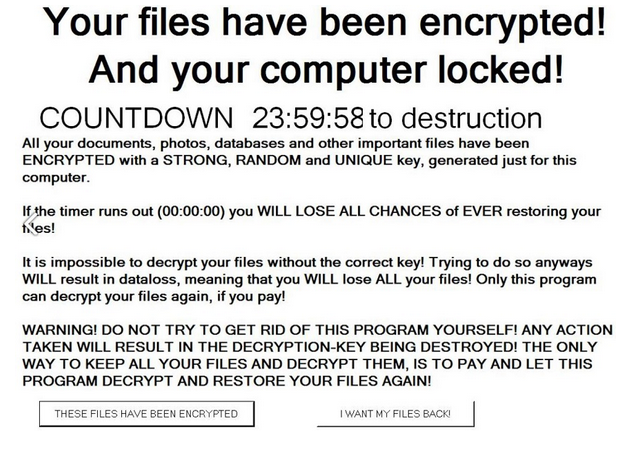
Danish chiropractors are the target of a highly targeted ransomware attack that attempts to encrypt all kinds of files for ransom. The attack begins with a perfect Danish drawn email, reports the Danish security firm CSIS . The IT security does not exclude that the message was written by a Dane. The email tries through social engineering open the receiver to let the included Dropbox link.

This link points to the kinds of ransomware that encrypts files on the computer. After encrypting a message appears on the screen that the files are encrypted and the user has 24 hours time to get his files, he or she will lose otherwise permanently.The malware also prevents the use of various Windows programs, such as Task Manager, Regedit and MSconfig. The ransomware has a keylogger to save keystrokes.

"We have decided to classify the attack as a major risk, even though that focuses on a specific group. This is mainly because of the level of social engineering that precedes the attack and the destructive code is attempted on the computer to install, "says Peter Kruse of CSIS. He notes that this type of attack is likely to be successful in many Danish organizations and therefore a threat to both companies and the authorities.

Saturday, 28 February 2015

MEGA: PayPal Account Closed Due To Encryption


PayPal has the account of the online storage MEGA closed, according MEGA is due to the end-to-end encryption which it offers to users. That leaves the storage service of internet entrepreneur Kim Dotcom in a blog posting know. MEGA states that it is aware of a report that the storage service as illegal cloud storage service was dismissed.

This US Senator Patrick Leahy Visa and Mastercard put under pressure not to accept payments for more MEGA. Then the credit card companies would have PayPal put under pressure not to process payments more for MEGA. MEGA showed opposite PayPal know that it is indeed a legitimate service and provided all kinds of statistics to prove this. Yet PayPal decided to discontinue the service towards MEGA.

MEGA would have made the payment service excuses and admitted that it was a legitimate service. One of the biggest stumbling blocks, however, the end-to-end encryption it offers, which is unknown what is offered via the cloud storage service. MEGA still pointed to the encryption models of other cloud storage services such as Apple, Dropbox and SpiderOak, but that would be no problem for the pay.

"I want to thank PayPal for supporting MEGA for such a long period. The pressure of Hollywood and the US government was just too big," said Kim Dotcom , founder of MEGA. Then he calls his followers to go use bitcoin now.

Thursday, 12 February 2015

Facebook Launches Platform For Sharing Of Cyber Threats


Facebook has a platform launched by which Internet companies can share information about cyberthreats with other parties. The platform called Threat Exchange and is built on the existing Facebook infrastructure. Through various APIs (application programming interface) participants available threat information retrieval and delivery.
It is, for example, issues such as domains and malware instances. However, it is also possible for participants to only share certain information with other companies who are experiencing the same problems or attacks. Also you can choose to share the information only within a particular group or multiple groups. Meanwhile would Pinterest, Tumblr, Twitter and Yahoo already participate in the project and bitly and Dropbox will soon join.

Wednesday, 14 January 2015

Crypto Stick For Secure Login And Encryption Is Now Called Nitrokey


The Crypto Stick, a USB stick with which Internet users can log in and secured files and email can encrypt, has been given a new name, namely Nitrokey . The new name should reflect the development of the stick, which is now finally ready for consumers.

The secret keys Nitrokey used to encrypt or sign located on the USB stick. According to the developers, it is impossible to extract these secret keys Nitrokey, making the device would be immune to viruses and Trojans. Furthermore, the PIN that the user must choose and the "do not manipulate the" smart card to ensure that the Nitrokey in case of theft or loss is still protected. Both the hardware and software Nitrokey are both open source.


The USB stick can be used for various purposes, such as secure login via a One Time Password for example Google or Dropbox, email encryption based on S / MIME and OpenPGP, encrypting files and hard drives and user authentication on both local computers as networks. Mozilla uses the Crypto Stick to secure its infrastructure.

The Crypto Stick is already since 2008 as "hobby open source project" in development. The developers say that they have learned during this time that developing a system that works is one thing, but delivering a device that is stable and ready for consumers, is a whole different story. The development of the latest version of Crypto Stick took two years to complete and is now complete. Now the system operates stably concentrate the developers at its production. Because of the new phase of the project has decided to change the name of Crypto Stick Nitrokey. "The goal is to provide the best open source securitykey to our users remains unchanged," they note

Friday, 11 April 2014

Condoleezza Rice joins Dropbox, discussion widely


Last Wednesday, the cloud storage service Dropbox known that former foreign minister of the United States, Condoleezza Rice, joins the board of directors of the company. The company called Rice "a leader who can help expand. Global presence from us"

Discussion

The addition of Rice took somewhat different than planned because since the arrival of Rice is Dropbox under fire and the discussion flared up. There is a campaign "Drop Dropbox" started calling to make the service any longer.
The main objection that is mentioned on this site is that Rice was actively involved in the decision to start the war. Iraq Rice also performed according to the website a central role in legitimizing torture under the Bush administration. It is stated that a report by the Senate shows that Rice verbally gave permission to torture suspects and later lied about the extent to which she was involved in this decision.
It is also claimed that Rice was not only a supporter of the extensive domestic spying program under the Bush administration, but they also gave permission without judicial warrant to eavesdrop. Members of the UN Security Council.
"Why in God's name, given what we now know about the secret spying program of the U.S. and the role of rice in there playing, like someone if she is involved in Dropbox, an organization that we trust with our most important business and personal data? "
Finally the website gives an overview of alternatives to Dropbox.

Twitter

The discussion about the arrival of Rice is widespread. Many websites have a negative sound. Also on twitter are many negative comments found.

Thursday, 10 April 2014

Serious flaw found in OpenSSL

Programmers create code and hackers find errors in it and use them. Discovered a hole in the most widespread cryptographic the OpenSSL could potentially lead to data theft almost all Internet users.


Seventh of April came security bulletin CVE-2014-0160, from which it became aware of the continued existence of a critical vulnerability in the cryptographic package OpenSSL.

Found that implementation algorithms TLS and SSL are used today in most versions of OpenSSL properly handle expansion packs Heartbeat (because of what the error was called HeartBleed). This allows hackers to gain remote access to confidential information from RAM active network process outside the buffer.

An error in the system has learned the Finnish-American company Codenomicon, what hastened to inform the world through a special website heartbleed.com. Heart Bleed - is the name given error experts, loosely translated it means "bleeding heart."

Such dramatic name was not chosen randomly. An error was detected in the package heartbeat (heart beat, heart rate) used for fault detection and resource management server cluster. The result was a play on words in the heart of the leak occurred.

Surprisingly, the critical vulnerability did not notice for two years. It affects all versions from 1.0.1 to OpenSSL 1.0.1f inclusive and 1.0.2-beta1.

As a result of that error in them is not checked  in the recording of the actual length of SSLv3. This allows you to read without authorization to 64 Kbytes of RAM process on the connected client or server for each request. In many cases this is enough to get the keys, passwords or other sensitive data. Vulnerable versions of OpenSSL cryptographic package from March 2012 are included in many distributions and BSD OS family of almost all branches of the Linux Debian, RedHat and Slackware. 


The first error affects servers Apache, nginx, project Tor (via the web server https://www.torproject.org), as well as many websites that use the HTTPS, even if access to them is carried out by VPN.

Unlike all the other "helpers hackers» Heart Bleed intercepts encryption keys - the cornerstone of secure connections, which encrypts the data transmission between servers. By themselves, the captured data is not worth anything, because the same encrypted PIN bank card might look like, «dkgh # k87u». Without the key, which will allow to decipher the code, it's just a set of symbols. But if the key will be in the hands of criminals, then get the raw data for them there is no trouble.

The greatest danger lies in the fact that this hack does not leave absolutely no trace in the case of data theft is not possible to know about this.

It would seem, what's this, because such errors are almost every day. However encryption package OpenSSL - the most widespread in the world. It is used mostly in the Apache web server and nginx. According to research company Netcraft, on these architectures employ about 66% of all sites on the Internet. Thus, only every third site does not represent a potential threat in terms of data theft. Among the endangered sites include such popular services like Twitter, Dropbox, Yahoo!, Steam and others. OpenSSL packages are used to everything else for the operation of e-mail servers and diverse client software.

To determine the degree of risk of error Codenomicon tried to kidnap their own data as it would make professional hackers.

As a result, they managed to make an attack on their own servers, without leaving any traces. Using only a hole in the system, Codenomicon received encryption keys. Using them, experts have collected from servers usernames and passwords, correspondence employees through messengers and email, as well as confidential company records stored on your computer.


Of course, such a dangerous hole could not remain uncovered. As a result, on April 7 was released a new version of OpenSSL, in which the error is no longer present. However, a simple upgrade package is not enough. If criminals have stolen encryption keys, they can use them in the same way as in the previous version, and for security administrators need to get a new security certificates and to generate new keys.

Of course, for large projects should not worry, because the price of their negligence administrators too great. It can be assumed that the relevant work already done on the servers.

In Codenomicon even see the positive side of Heart Bleed: because administrators can not ignore the fact that hole detection, they have to update the system data encryption on their servers. Along with them are likely to be installed, and other updates that have been postponed for a certain period.

While common in the bulletin and news reports officially recommend the following steps:


  • Install a patched version of OpenSSL 1.0.1g or 1.0.2-beta2 or recompile OpenSSL package with key OPENSSL_NO_HEARTBEATS;
  • reissue the SSL-certificate;
  • lures (honeypot), simulating the presence of a vulnerable server package OpenSSL, and check to connect to them.


We recommend that if you do not use in public places WiFi network, then try to put this kind of functionality is temporarily closed.

Personal use of computers when not readily allow strangers remote control of their computer to prevent personal information from being stolen.

Once the leakage of information to remind consumers to timely remedy, keep relevant evidence, take the initiative to safeguard their rights.